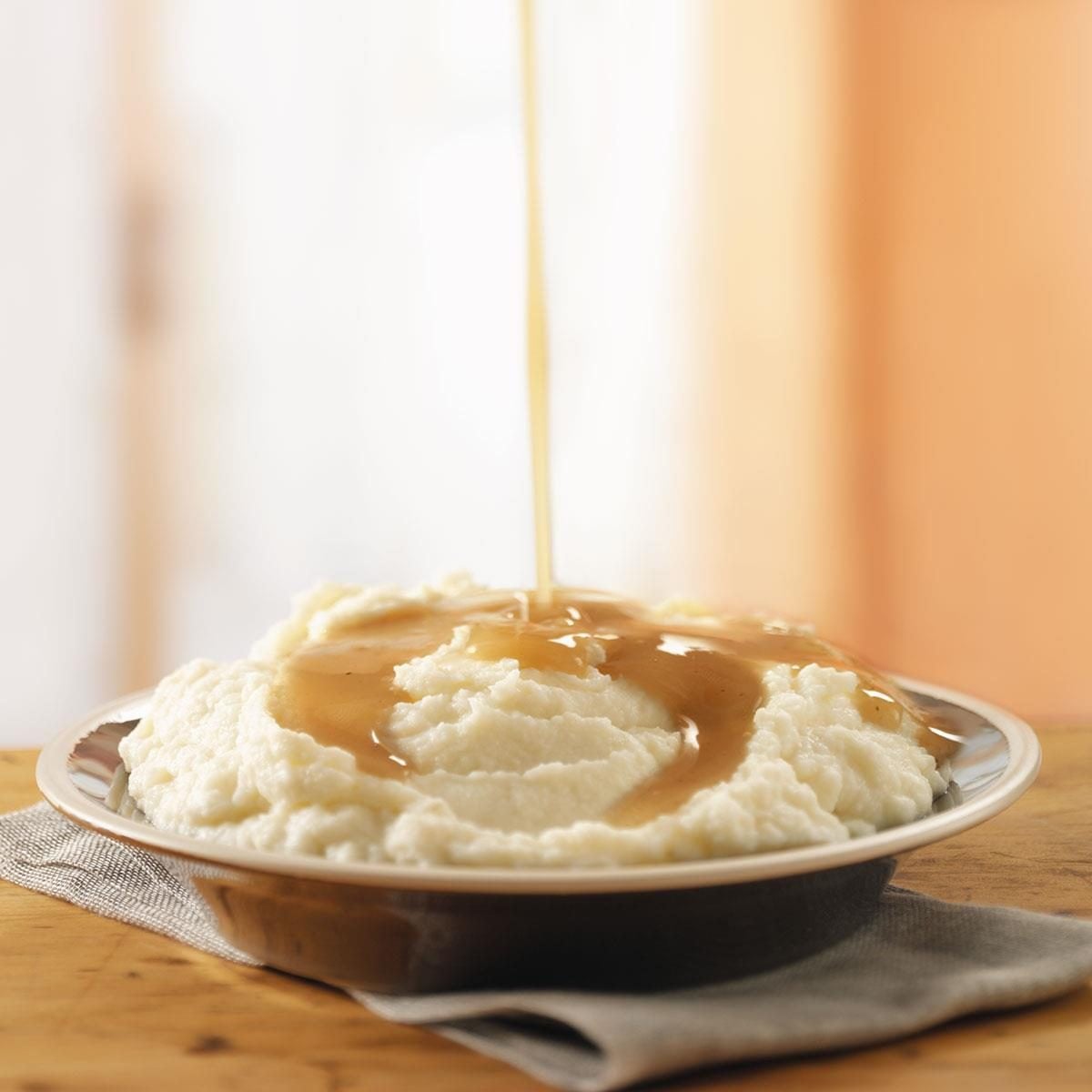
The aroma of a perfectly roasted turkey filling your kitchen is one of the most comforting scents imaginable, especially during the holidays. But as delightful as the turkey itself is, many would agree that the meal isn't truly complete without that rich, velvety companion: homemade turkey gravy. Forget those lackluster packets or jars from the supermarket; the most authentic and flavorful gravy comes directly from the "liquid gold" left behind in your roasting pan.
Making your own turkey gravy from pan drippings might sound like a daunting task reserved for seasoned chefs, but it's surprisingly simple, incredibly quick, and yields a result that will elevate any meal to a celebratory feast. This comprehensive guide will show you how to transform those precious turkey drippings into an utterly delicious, no-waste gravy that will have everyone asking for seconds. You'll learn the foolproof techniques to create a smooth, rich gravy that's ready in about 20 minutes, using ingredients you already have on hand.
Why Homemade Turkey Gravy Reigns Supreme: Unlocking Unrivaled Flavor
There’s a common misconception that store-bought gravy is a necessary shortcut, but once you taste homemade, there's simply no going back. The magic lies in the foolproof turkey gravy recipe that utilizes the pan drippings. These drippings aren't just grease; they are a concentrated essence of your turkey, infused with all the herbs, seasonings, and browned bits that collected at the bottom of the roasting pan. This natural foundation provides a depth of flavor that no amount of artificial flavoring can replicate.
- Unparalleled Depth of Flavor: Your turkey drippings carry the unique savory profile of your bird, enhanced by any aromatics (onions, carrots, celery) or herbs (sage, thyme, rosemary) you used in the roasting process. This creates a deeply integrated taste that is impossible to replicate with generic broths.
- A No-Waste Philosophy: Every culinary professional will tell you to never let good drippings go to waste. By transforming them into gravy, you're embracing a smart, economical, and delicious approach to cooking that honors every part of your meal preparation.
- Freshness and Control: When you make gravy from scratch, you control the ingredients. No artificial colors, preservatives, or excessive sodium. You can tailor the seasoning precisely to your preference, ensuring a fresh, vibrant taste that complements your turkey perfectly.
- Ease and Speed: Despite its gourmet taste, homemade gravy is remarkably quick to prepare. With your turkey resting, you can whip up a batch in under 20 minutes, transforming potential waste into a show-stopping side.
Even if you only have a few tablespoons of pan drippings, that’s often all you need to infuse your gravy with that rich, holiday flavor. You can always supplement with additional broth or stock to achieve the desired volume without sacrificing taste.
The Foundation: Understanding Pan Drippings and the Magic of a Roux
At the heart of any great turkey gravy from scratch are two key components: the pan drippings and a properly executed roux. Understanding these elements is crucial for achieving that silky, rich consistency and profound flavor.
What are Pan Drippings?
As your turkey roasts, its natural juices render out, mingling with melted fat, seasonings, and any caramelized bits that stick to the bottom of the pan. These are your pan drippings – a potent concentrate of turkey flavor. Before using them for gravy, you’ll want to prepare them correctly:
- Skim the Fat: As the drippings cool slightly, the fat will rise to the top, forming a distinct layer. You'll want to skim off most of this fat, reserving 3-4 tablespoons for your roux. Too much fat can make your gravy greasy. A gravy separator is a handy tool for this, but a spoon works just as well.
- Strain the Drippings: Once the fat is skimmed, pour the remaining liquid (the flavorful juices) through a fine-mesh sieve into a separate bowl. This removes any small bone fragments, herbs, or burnt bits, ensuring a smooth gravy. Press on any solids in the sieve to extract every last drop of flavorful liquid.
The Magic of the Roux
A roux (pronounced "roo") is the foundational thickening agent for many sauces, gravies, and soups. It’s a simple combination of equal parts fat and flour, cooked together. For turkey gravy, this means combining some of your reserved turkey fat with all-purpose flour.
- Equal Parts Fat and Flour: The golden rule for a perfect roux is a 1:1 ratio. If you use 3 tablespoons of fat, you’ll use 3 tablespoons of flour. This ratio ensures your gravy thickens properly and remains silky, not gummy.
- Cooking the Roux: The fat and flour are cooked over medium heat, whisked continuously, until the raw flour taste is cooked out and the mixture turns lightly golden and fragrant. This process takes about 2-3 minutes. You're not aiming for a dark roux, which is used for Gumbo; a pale, toasty color is perfect for turkey gravy, lending a subtle nutty flavor.
Step-by-Step Guide: Crafting Your Perfect Turkey Gravy
With your turkey resting on the counter, it’s prime time to turn those drippings into a masterpiece. Here's how to make your best turkey gravy yet:
- Prepare Your Drippings: First, carefully pour the contents of your roasting pan into a heatproof container. Allow it to rest for a few minutes so the fat separates and rises to the top. Skim off 3-4 tablespoons of the clear turkey fat and set aside. Strain the remaining liquid (the flavorful turkey broth) through a fine-mesh sieve into another bowl, pressing down on any solids to extract maximum flavor. You should have at least 1 cup of strained liquid, ideally more. If you have less, supplement with turkey or chicken broth.
- Make the Roux: Place your roasting pan (if stovetop safe) or a heavy-bottomed saucepan over medium heat. Add the reserved 3-4 tablespoons of turkey fat. Once melted and shimmering, whisk in an equal amount (3-4 tablespoons) of all-purpose flour. Continue whisking steadily for 2-3 minutes, until the mixture is lightly golden and emits a pleasant, toasted aroma. This ensures no raw flour taste lingers.
- Gradually Add Liquid: This is where the magic happens and where lumps are avoided. Slowly, a little at a time (about ½ cup at a time), pour your strained turkey drippings and any additional stock into the roux, whisking vigorously after each addition. The mixture will thicken almost immediately. Keep adding liquid and whisking until all the liquid is incorporated and the gravy begins to thicken smoothly.
- Simmer to Perfection: Once all the liquid is added and whisked smooth, bring the gravy to a gentle simmer. Let it cook for 5-10 minutes, stirring occasionally, until it reaches your desired thickness. The gravy will thicken further as it cools.
- Season and Serve: Taste your gravy. It will likely need salt and freshly ground black pepper. Adjust seasonings to your preference. For an extra layer of flavor, consider adding a pinch of dried sage, a dash of Worcestershire sauce, or a splash of dry sherry. Serve immediately, warm and velvety!
For those who love an even deeper, more old-fashioned flavor or need to extend their gravy to feed a larger crowd, consider simmering the turkey neck and giblets (excluding the liver, which can make it bitter) with some aromatics (onion, celery) and water to create a quick giblet stock. You can then use this stock to supplement your pan drippings in step 3, creating an exceptionally rich and flavorful gravy. This approach is a fantastic way of mastering turkey gravy with simple, yet impactful steps.
Troubleshooting and Pro Tips for Flawless Gravy
Even the most experienced cooks can face a minor gravy challenge. Here are some solutions and tips to ensure your gravy is always perfect:
Common Gravy Fixes:
- Gravy is Too Thin: If your gravy isn't thickening enough, you have a couple of options. You can continue simmering to reduce it, allowing more liquid to evaporate. Alternatively, create a small "slurry" by whisking 1 tablespoon of flour or cornstarch with 2 tablespoons of cold water until smooth. Whisk this slurry into the simmering gravy a little at a time until it reaches your desired consistency.
- Gravy is Too Thick: Simply whisk in more warm turkey or chicken broth, or even a splash of hot water, until it thins to your ideal consistency.
- Lumpy Gravy: Lumps usually form when liquid is added too quickly to the roux, or not whisked thoroughly enough. Don't despair! Pass the gravy through a fine-mesh sieve or use an immersion blender for a few seconds to smooth it out completely.
- Oily Gravy: This typically means too much fat was left in the drippings. If it’s overly greasy, skim off the excess fat from the surface with a spoon. You can also try simmering it a bit longer; sometimes the fat will emulsify back into the gravy.
Pro Tips for the Best Gravy:
- Taste, Taste, Taste: Always taste your gravy at various stages, especially before serving. It's often the difference between good gravy and *great* gravy. Adjust salt, pepper, and other seasonings as needed.
- Consider Umami Boosters: A dash of soy sauce, Worcestershire sauce, or even a small amount of mushroom powder can significantly deepen the savory umami flavor of your gravy without altering its character.
- Add Fresh Herbs at the End: If you love the aroma of fresh herbs, stir in a tablespoon of finely chopped fresh parsley, sage, or thyme just before serving. The heat of the gravy will release their essential oils, adding a vibrant top note.
- Make Ahead (Almost): You can prepare the strained drippings and even make the roux ahead of time. Keep them separate. When ready to serve, combine them and finish the gravy. Leftover gravy can be stored in an airtight container in the refrigerator for up to 3-4 days or frozen for up to 3 months. Reheat gently on the stovetop, whisking in a little extra broth or water if it’s too thick.
Embrace the simplicity and unparalleled flavor of homemade turkey gravy from pan drippings. It’s a testament to no-waste cooking and a surefire way to impress your guests, turning an ordinary meal into an extraordinary culinary experience.
